





If you have spent the past year watching grants get paused, cut, or canceled, last week's election may feel like the first good news in a while. Here is the short answer: the new Congress gives nonprofits a real opening to restore funding that was lost. It will not happen on its own, and it will not happen overnight.
The organizations best positioned to benefit will be the ones that start preparing now. In this post, we look at what could change, why, and how to get ready.
Why could grants that were cut come back?
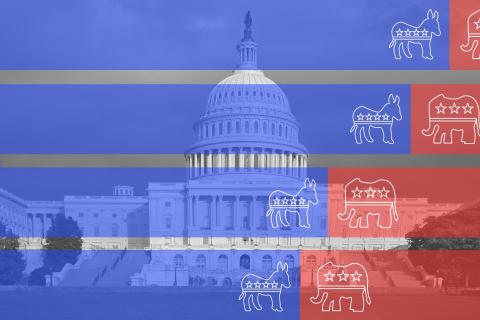
Congress controls federal spending. In the Nov. 3 midterms, voters changed the leadership of both the House and the Senate. When the new Congress is sworn in on Jan. 3, 2027, new leaders will chair the committees that write spending bills and oversee federal agencies.
Nonprofit leaders are already making the case for restoration. Akilah Watkins, president of Independent Sector, told The Chronicle of Philanthropy she wants Congress to restore federal funding for research, human services, education, and safety net programs such as nutrition assistance. She expects the new Congress to push for those priorities.
Some funding has already come back through the courts. A federal court decision in July 2026 reinstated 1,180 active grants worth roughly $5.4 billion across 23 states, according to accounting firm RSM.
The new Congress will also have stronger oversight tools, including hearings and testimony from agency officials. Nonprofit leaders quoted by The Chronicle say that could bring more clarity to how agencies decide which grants to fund, pause, or end.
Which kinds of funding are people watching?
The areas hit hardest by recent cuts are a good place to start. Examples reported this year include:
- Public health and behavioral health. In January 2026, the administration announced it was terminating roughly $2 billion in Department of Health and Human Services grants to more than 2,000 nonprofits providing public health services, including substance abuse and mental health services, according to the Center on Budget and Policy Priorities.
- Teen pregnancy prevention. The same analysis cites canceled teen pregnancy prevention grants as another example of funding that was ended midstream.
- Research, human services, education, and safety net programs. These are the areas Independent Sector has named as priorities for restoration.
If your organization lost funding in one of these areas, or stopped applying because priorities shifted, now is the time to pay attention.
Will it happen right away?
Probably not, and it helps to go in with clear eyes. The president still signs or vetoes every spending bill, so most decisions will come through negotiation. Current federal funding runs under a temporary spending law, and much of the fiscal year 2027 budget is likely to be settled by the new Congress next year. Research advocates have cautioned against expecting a quick or dramatic shift.
Hope is welcome. Budgets, though, are best built on what is confirmed. The good news is that getting ready does not have to wait.
How can your organization get ready? A checklist
When funding returns, the organizations that benefit most are the ones that are ready before the funding notice is published. Here are seven steps you can start this month:
- Document what you lost. Record each grant that was paused, cut, or terminated: the agency, award number, amount, dates, and the people and services affected. That record helps you reapply, and it helps decision-makers understand what is at stake.
- Tell the story of your impact. Pair the numbers with what changed in people's lives while your program was running, and what happened when it stopped.
- Build relationships with your elected officials. Invite them and their staff to see your work in person. When decision-makers see the people your programs serve, the case for funding becomes real.
- Talk with your program officers. Ask what they are hearing about upcoming competitions and timelines, and whether any paused awards might move forward.
- Get your proposal ready now. Update your needs data, outcomes, and budget so a strong draft is waiting when a funding notice opens. Deadlines are often tight when budgets arrive late.
- Look beyond Washington. New governors and state legislators also take office in January, and many federal dollars reach communities through state and local agencies. Those relationships matter too.
- Keep diversifying. Foundations, corporate partners, earned revenue, and individual donors will still matter, whatever happens in Congress.
What is a continuing resolution, and why does it matter right now?
A continuing resolution (CR) is a temporary law that keeps federal agencies funded, usually at the prior year's levels, while Congress finishes the annual budget. Under a CR, agencies generally cannot start new programs. That is why restored or new funding usually has to wait for a full-year budget, and why it pays to be ready when that budget arrives.
Why does strong grantsmanship matter even more now?
When funding returns, competition returns with it. Organizations that lost grants will reapply, and new applicants will step forward. Reviewers will be looking for proposals that clearly connect a real community problem to measurable outcomes, a sound plan, and a realistic budget.
The Grantsmanship Center has been teaching grantseekers since 1972, through many changes in Washington. Through all of them, one thing has held true: well-planned programs and clear, honest proposals stand out.
Quick answers
Will grants that were cut automatically come back?
No. Restoring funding takes action by Congress and the agencies, and new funding often comes through a new competition. Being ready to apply is what puts you in position.
Should we pause federal applications until things settle?
No. Open funding notices still have deadlines, and a well-prepared application is ready whenever funding moves.
Can our nonprofit talk with elected officials about funding?
Yes. Sharing your work and its impact with the people who represent your community is one of the most useful things you can do right now.
The takeaway
Elections do not restore funding on their own. People do, by making the case, building relationships, and being ready. This is a real opening for nonprofits that have spent a difficult year doing more with less.
Start now. Document your story, strengthen your proposals, and show up for the conversations that are about to happen. You do not have to figure it out alone.
Learn the process for applying for a grant from the federal govenment and learn how to build a strong application. Sign-up for The Grantsmanship Center's Competing for Federal Grants-Online, January 25-29, 2027.
Get funding. Create change.